How we match your ad to the right podcast — by meaning, not keywords
Keyword targeting keeps missing the shows that actually fit. Here's how 10AM reads a script and a show for what they mean, scores the fit, and places the ad where it belongs — embeddings, guardrails, and the honest failure cases included.

Ask most ad platforms to place a meditation app on podcasts and they'll go looking for the word “meditation.” They'll find the shows that say it in their titles and skip the late-night founder interview where the host spends ten minutes on burnout and why they finally started sleeping again. That episode is a near-perfect fit. Keywords never see it.
That gap is the whole reason 10AM exists. Advertising on independent audio isn't a search problem — it's a fit problem. So instead of matching strings, we match meaning. Here's how that actually works under the hood, without the hand-waving.
Keywords describe words. We wanted to describe topics.
A keyword match asks a narrow question: does this show contain this term? A meaning match asks a better one: is this show about the same things this ad is about? Two shows can share zero keywords and still be about the same thing — grief, small-business cashflow, marathon training. Two shows can share a keyword and be nothing alike.
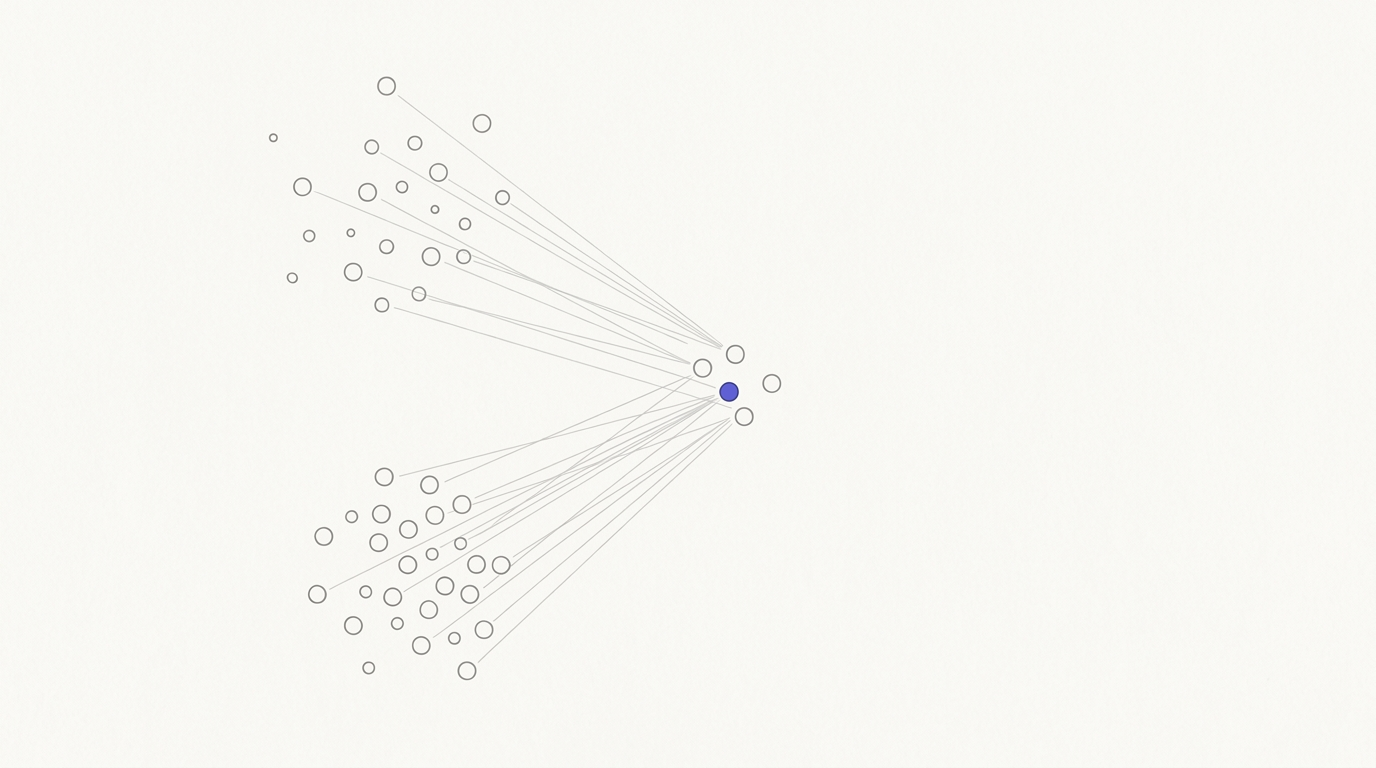
To ask the better question, both the ad and the show have to be represented as topics, not text. We do that by turning each into an embedding — a list of numbers that places it in a shared “meaning space,” where things that are conceptually close sit close together.
What we actually read from a show
Before a show can be placed in that space, we build a profile of it from signals that describe what it's really about — not just how it's tagged:
- Transcripts of recent episodes, so we're reading what hosts actually talk about week to week.
- Show and episode descriptions, which tell us how the creator frames the show.
- Audience context the creator shares — who listens, and what they come for.
- Historical fit — which past placements landed well on this show and which didn't.
The ad gets the same treatment. From the brief, the script, and the product itself, we build an embedding of what the advertiser is really selling and the mindset that makes someone care.
How a placement gets scored
With both sides in the same space, a match starts as a similarity score. But raw similarity isn't a good enough answer on its own — a show can be topically perfect and still be a bad place to run. So the similarity score is the first input, not the last word.
Topical similarity gets an ad into the room. Fit, safety, and timing decide whether it actually runs.
On top of similarity, the score folds in a handful of practical signals: whether the format the advertiser wants (host-read vs. produced, pre/mid/post) is even available on that show, how the show has performed for similar advertisers, and freshness — we down-weight shows we've placed on very recently so a listener isn't hearing the same category three episodes in a row.

The guardrails matter more than the match
A good match engine has to be comfortable saying “no placement” more often than it says yes. Two guardrails sit in front of every recommendation:
- Brand safety — content the advertiser has ruled out is filtered before scoring, not after. A perfect topical match inside an excluded category never reaches the shortlist.
- Host fit — creators keep the final say. A show can opt out of categories, and a host-read placement always routes to the host to accept, decline, or rewrite. The engine proposes; the creator disposes.
This is deliberately conservative. We would rather show an advertiser five shows they're delighted with than fifty they have to police.
Where it still gets things wrong
Meaning-based matching is a real improvement, not magic. The honest failure cases:
- Thin transcripts. A brand-new show with two episodes gives us little to read, so early matches lean more on descriptions and are less confident. We label that confidence rather than hide it.
- Irony and edge. A comedy show that talks about money sarcastically can read as a finance fit on the surface. Human review and creator opt-outs catch most of these; some slip.
- Genuinely new categories. When a product doesn't look like anything we've placed before, the engine is guessing more than matching. We flag those as exploratory.
Every placement ships with a plain-language “why this show” so the advertiser and the creator can both sanity-check the machine. If the reason doesn't hold up, it's a bad match — full stop.
What this means for you
If you're an advertiser, you stop shopping by keyword and start briefing by intent. Describe the product and who it's for; you get a ranked shortlist of shows that fit, each with a reason and a confidence level.
If you're a creator, you get ads that sound like they belong on your show — because they were chosen for meaning, and because you had the last word on every one.